
Magic Quadrant for Access Management 2021: What Organisations Need to Know
The Magic Quadrant for Access Management 2021 offered organisations a snapshot of a fast-changing identity security market. As businesses adopted cloud services, supported remote work and expanded their digital services, controlling who could access which systems became increasingly important.
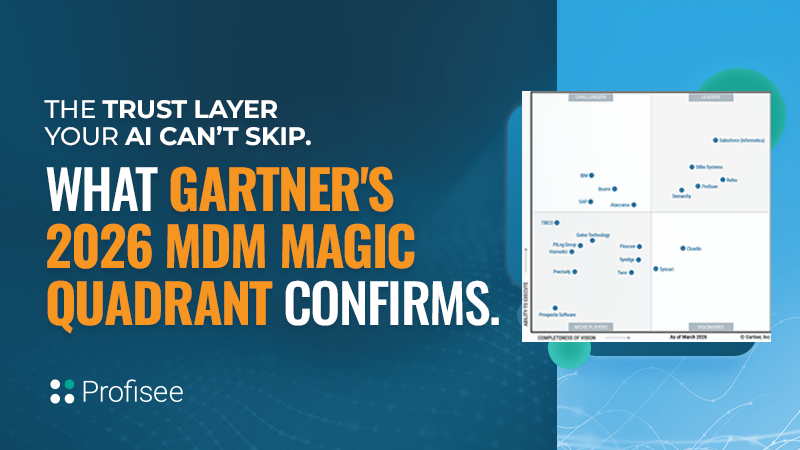
Gartner’s Magic Quadrant is a research framework that assesses technology providers in a particular market. Its familiar chart places vendors according to two dimensions: Ability to Execute and Completeness of Vision. The 2021 report can help inform a shortlist, but it should be treated as one input to a procurement decision rather than a definitive ranking or recommendation.
What is access management?
Access management covers the technologies and processes used to authenticate users and control their access to applications, systems and data. Common capabilities include single sign-on (SSO), multi-factor authentication (MFA), user directories, access policies and identity federation.
These tools serve employees, contractors, partners and, in some cases, customers. The requirements can vary considerably: an organisation securing staff access to internal applications faces different challenges from a business providing secure sign-in for millions of customers.
What the 2021 market reflected
The 2021 market was shaped by the shift towards cloud-based services and distributed workforces. Organisations increasingly needed to provide access from different locations and devices without relying solely on a traditional corporate network. This put greater emphasis on cloud-delivered identity services, adaptable authentication and policies based on a user’s context.
Another important trend was the growing overlap between workforce access management and customer identity and access management (CIAM). Some providers focused on employee access, while others offered capabilities for customer registration, sign-in and account management. Buyers needed to check carefully that a platform’s strengths matched their intended use case.
Vendors and market positioning
The 2021 Magic Quadrant included established technology companies as well as specialist identity providers. Gartner’s analysis placed vendors according to its assessment of their execution and vision; positions in the chart should not be taken to mean that every product is suitable for every organisation.
Vendors commonly discussed in connection with the report included Okta, Microsoft, Ping Identity and ForgeRock. Their offerings differed in areas such as deployment options, integration, customer identity features and support for existing IT environments. Organisations should consult the original Gartner research for the full vendor list, assessments and definitions used in that year’s report.
It is also important to remember that a Magic Quadrant is a point-in-time view. Products, company ownership, roadmaps and market conditions can change significantly after publication. A 2021 placement cannot, by itself, establish a provider’s current capabilities.
How to use the report when choosing a platform
Use the report to develop questions and identify providers for further evaluation. Before selecting a platform, consider:
- Your users and use cases: Decide whether the priority is workforce access, customer identity, partner access or a combination.
- Integration requirements: Check compatibility with your applications, directories, devices and cloud platforms.
- Authentication options: Assess support for MFA, passwordless sign-in and appropriate recovery processes.
- Policy and administration: Review how access rules are configured, monitored and maintained.
- Deployment and resilience: Confirm that the service model, availability commitments and data requirements suit your organisation.
- Total cost: Compare licensing, implementation, support and ongoing administration—not just the headline subscription price.
A practical proof of concept can reveal issues that a market overview cannot. Test representative applications and user journeys, including account recovery, offboarding and access from unusual locations or devices. Involve security, IT operations and the teams responsible for the user experience.
Why the Magic Quadrant is only one part of the picture
Access management is a core part of an organisation’s security strategy, but no single product guarantees secure access. Strong configuration, timely removal of former users, sensible access policies and ongoing monitoring remain essential. The right platform is the one that meets your requirements and can be operated effectively—not necessarily the one in the most prominent position on a chart.
The Magic Quadrant for Access Management 2021 is best used as historical market context and a starting point for research. For a current purchasing decision, compare up-to-date product documentation, independent evaluations and vendor proposals against your organisation’s own technical, regulatory and operational needs.
Gartner and Magic Quadrant are trademarks of Gartner, Inc. This article is independent commentary and is not endorsed by Gartner.
5 Benefits of the 2021 Magic Quadrant for Access Management
- Offers a useful overview of the 2021 access management market.
- Helps compare vendors using consistent evaluation criteria.
- Highlights differences in execution and strategic vision.
- Provides a starting point for building a vendor shortlist.
- Supports informed discussions about access management needs.
Limitations of Gartner’s 2021 Magic Quadrant for Access Management
- It is a point-in-time view and may be outdated.
- Vendor rankings do not guarantee the best fit for every organisation.
- The report may not reflect your specific requirements or budget.
- Assessments rely on Gartner’s criteria and methodology.
Offers a useful overview of the 2021 access management market.
The Magic Quadrant for Access Management 2021 offers a useful overview of the market at a time when organisations were adapting to cloud services and more distributed workforces. It brings together information about providers and their relative positioning, helping readers understand the range of solutions available and identify vendors for further research. As a snapshot of the market in 2021, it is a helpful starting point—but should be supplemented with current information when making a purchasing decision.
Helps compare vendors using consistent evaluation criteria.
One of the key benefits of the 2021 Magic Quadrant for Access Management is that it helps organisations compare vendors using consistent evaluation criteria. By assessing providers against shared dimensions, including their ability to execute and completeness of vision, the report offers a structured starting point for understanding how different solutions are positioned. This can make it easier to create a shortlist and identify areas for further investigation, while still allowing organisations to weigh each vendor against their own requirements.
Highlights differences in execution and strategic vision.
One of the main benefits of the 2021 Magic Quadrant for Access Management is that it distinguishes between vendors’ ability to deliver today and their strategic vision for the future. By assessing execution alongside factors such as product direction and understanding of the market, it helps organisations compare providers from two complementary perspectives. This can make it easier to identify vendors that meet immediate access management needs while also appearing prepared to respond to changing security requirements.
Provides a starting point for building a vendor shortlist.
One of the main benefits of the Magic Quadrant for Access Management 2021 is that it provides a useful starting point for building a vendor shortlist. By bringing a range of providers into one framework, it helps organisations identify potential options and compare their broad market positioning. The shortlist should then be refined against current product capabilities, technical requirements, budget and business needs, as the report is a snapshot of the market in 2021 rather than a purchasing recommendation.
Supports informed discussions about access management needs.
The Magic Quadrant for Access Management 2021 can support informed discussions by giving teams a shared overview of the market and the different approaches offered by providers. It can help stakeholders compare capabilities, identify questions to explore and clarify which requirements matter most, from single sign-on and multi-factor authentication to integration and deployment options. Used as a starting point rather than a substitute for detailed evaluation, it can help security, IT and business teams align on their access management needs.
It is a point-in-time view and may be outdated.
One limitation of the Magic Quadrant for Access Management 2021 is that it reflects the market at the time the research was published. Since then, vendors may have changed their products, pricing, ownership or strategic direction, while new technologies and providers may have emerged. As a result, the report is useful for historical context, but its assessments should be checked against current information before making a purchasing decision.
Vendor rankings do not guarantee the best fit for every organisation.
A vendor’s position in the Magic Quadrant for Access Management 2021 does not guarantee that its product is the right choice for every organisation. The rankings reflect Gartner’s assessment against broad market criteria, which may not align with a particular organisation’s budget, technical environment, regulatory obligations or priorities. Buyers should therefore use the report as a starting point for research and assess vendors against their own requirements, including through product demonstrations or a proof of concept.
The report may not reflect your specific requirements or budget.
One limitation of the Magic Quadrant for Access Management 2021 is that its assessments may not reflect your organisation’s specific requirements or budget. A vendor’s position in the chart does not show whether its features, deployment options or pricing are right for your environment. Treat the report as a starting point for research, then compare current products against your needs, technical setup and total cost.
Assessments rely on Gartner’s criteria and methodology.
One limitation of the Magic Quadrant for Access Management 2021 is that its assessments rely on Gartner’s own criteria and methodology. These provide a consistent framework for comparing vendors, but may not reflect every organisation’s priorities, technical environment or definition of value. A provider’s position should therefore be treated as one perspective, rather than a universal judgement of suitability, and weighed alongside independent research and your own requirements.