
One Identity Cloud Access Manager: Secure Access to Cloud Applications
As organisations rely on more cloud-based services, managing access to applications can become increasingly complex. Employees may need to use a mix of cloud and on-premises systems, while IT teams must protect accounts, apply access policies and maintain visibility over sign-ins. One Identity Cloud Access Manager is designed to help address these challenges by providing a central way to manage and secure access to web and cloud applications.
What is One Identity Cloud Access Manager?
One Identity Cloud Access Manager is an identity and access management solution focused on providing users with controlled access to applications. It can help organisations establish single sign-on (SSO), so users can access supported applications without repeatedly entering separate credentials.
By bringing access management together, the solution can make application access easier for users and more manageable for administrators. Its suitability depends on an organisation’s application estate, identity infrastructure and security requirements.
How it can help
Simpler sign-in
With SSO, users can sign in through a central access point and then reach applications for which they have permission. This can reduce the number of passwords they need to remember and make day-to-day access more straightforward.
Centralised access policies
Managing access centrally can help IT teams apply consistent rules across connected applications. Policies can be used to determine who is allowed to access a service and under what conditions, depending on the solution’s configuration and the integrations in place.
Support for cloud and web applications
Organisations often use applications from different providers, alongside internally hosted services. A central access management layer can help bring these services under a more consistent sign-in experience. Before implementation, it is important to check that the applications an organisation depends on are supported and can be integrated in the required way.
Improved oversight
Centralising aspects of authentication and access can make it easier for administrators to review how users reach applications. This can support security operations and access reviews, although the visibility available will depend on configuration, integrations and reporting capabilities.
Why consider an access manager?
Without a consistent access strategy, organisations can end up with disconnected application accounts, duplicated administration and unclear ownership of permissions. A dedicated access management solution can help reduce this fragmentation. It may also support wider security practices such as limiting access to what users need and reviewing permissions when their roles change.
SSO is not a replacement for good identity security. Organisations should still use strong authentication, protect privileged accounts, remove access promptly when it is no longer required and monitor for suspicious activity.
Planning an implementation
Before deploying One Identity Cloud Access Manager, assess how users authenticate today and identify the applications that should be included. Check each application’s integration requirements, decide how identities and groups will be managed, and define policies for different user types.
It is also worth planning for exceptions, such as applications that cannot use the preferred sign-in method, as well as testing account recovery and service continuity. A phased rollout can help teams identify integration or user experience issues before extending access management across the organisation.
Questions to ask before choosing a solution
- Does it support the cloud and web applications the organisation uses?
- How will it work with existing directories, identity providers and authentication methods?
- Can access policies reflect the organisation’s security and compliance requirements?
- What logging, reporting and administrative controls are available?
- How will the service be maintained, supported and updated?
Conclusion
One Identity Cloud Access Manager can help organisations provide a more consistent way to access cloud and web applications, while giving administrators a central point for managing aspects of authentication and access. The benefits depend on selecting the right integrations, configuring policies carefully and maintaining strong identity security practices. A review of application compatibility and operational requirements is an important first step towards deciding whether it is a suitable fit.
One Identity Cloud Access Manager: Five Frequently Asked Questions
- What is One Identity Cloud Access Manager?
- How does One Identity Cloud Access Manager single sign-on work?
- Which cloud and web applications can One Identity Cloud Access Manager integrate with?
- How does One Identity Cloud Access Manager help protect user access?
- What should organisations consider before implementing One Identity Cloud Access Manager?
What is One Identity Cloud Access Manager?
One Identity Cloud Access Manager is an identity and access management solution that helps organisations control how users sign in to web and cloud applications. It can provide single sign-on, allowing users to access supported services through a central sign-in experience, while administrators manage access according to their organisation’s policies. Its features and integrations depend on the product configuration and the applications in use.
How does One Identity Cloud Access Manager single sign-on work?
One Identity Cloud Access Manager single sign-on (SSO) lets users authenticate through a central sign-in process and then access connected applications without entering their credentials separately for each one. After verifying the user’s identity, it grants access according to the configured policies and the application’s integration method. The exact sign-in flow and supported protocols depend on the applications and how Cloud Access Manager is configured.
Which cloud and web applications can One Identity Cloud Access Manager integrate with?
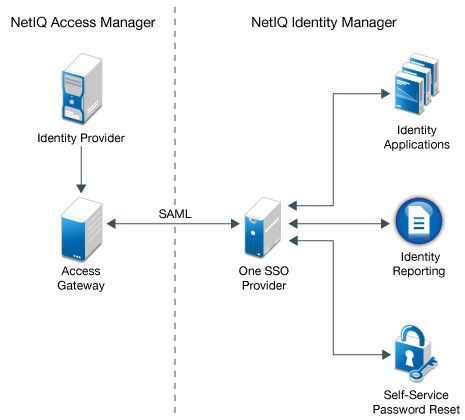
One Identity Cloud Access Manager can integrate with a range of cloud and web applications, depending on each application’s authentication options and the product’s configuration. Integrations may use supported standards such as SAML or other sign-on protocols, while some applications may require specific connectors or additional setup. As compatibility can vary by application and version, check One Identity’s current documentation or speak to your administrator before deployment.
How does One Identity Cloud Access Manager help protect user access?
One Identity Cloud Access Manager helps protect user access by providing a central way to manage authentication and access to connected applications. Organisations can apply consistent access policies, control which users can reach particular services and use single sign-on to reduce reliance on multiple application passwords. When configured alongside appropriate authentication measures and regular access reviews, it can support stronger oversight and help limit access to what each user needs.
What should organisations consider before implementing One Identity Cloud Access Manager?
Before implementing One Identity Cloud Access Manager, organisations should review their application estate, identity infrastructure and security requirements. Check that essential cloud and web applications are supported, and assess how the solution will integrate with existing directories, authentication methods and access policies. It is also important to plan user roles and permissions, account recovery, monitoring and service continuity, then test the configuration with a small group before a wider rollout. Finally, consider ongoing administration, support and compliance needs to ensure the solution remains effective as systems and users change.