
Network Detection and Response: A Practical Guide
Modern organisations rely on networks to connect users, devices, applications and cloud services. That connectivity also creates opportunities for cyber attackers. Threats can enter through compromised accounts, vulnerable devices, malicious software or trusted services, and may move across a network without immediately attracting attention.
Network Detection and Response (NDR) helps security teams identify suspicious activity across network traffic and investigate or contain potential threats. It is not a replacement for other security controls. Instead, it adds visibility into how systems communicate, helping teams spot activity that endpoint or identity tools may not reveal on their own.
What is Network Detection and Response?
NDR is a cybersecurity approach that analyses network activity to detect threats and support an effective response. NDR platforms typically collect and examine network traffic metadata, such as which systems are communicating, when they communicate and how much data is transferred. Some solutions can also inspect selected traffic content, depending on the organisation’s architecture, policies and encryption practices.
Using analytics, threat intelligence and behavioural models, an NDR system looks for activity that may indicate a security incident. Examples include an unusual connection to an external server, unexpected data transfers, communications between devices that do not normally interact, or signs that a compromised system is attempting to spread across the network.
How does NDR work?
Although capabilities vary between products, an NDR deployment commonly involves several stages:
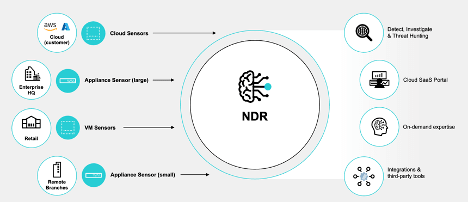
- Collecting network data: Sensors or integrations gather information from network traffic, cloud environments and other relevant sources. Data may come from network taps, traffic mirrors, flow records or existing security tools.
- Establishing normal behaviour: Analytics build a picture of typical communication patterns across users, devices and services. This provides context for identifying activity that appears unusual.
- Detecting suspicious activity: The platform combines behavioural analysis, known threat indicators and security rules to flag potential threats. A single unusual event is not necessarily malicious, so context is important.
- Investigating alerts: Security teams can review related events, trace communications and identify which systems may be affected. Linking activity across time can help reveal a wider attack sequence.
- Supporting response: Depending on the solution and its integrations, teams may be able to isolate a device, block a connection, disable an account through another security tool or guide a manual investigation.
What can NDR help detect?
NDR can be useful for identifying threats that are difficult to spot through a single endpoint or perimeter alert. These may include:
- lateral movement between systems after an initial compromise;
- command-and-control communications between malware and external infrastructure;
- unusual data transfers that could indicate data theft;
- unexpected access to sensitive services or network segments;
- activity involving unmanaged or poorly monitored devices; and
- changes in communication patterns that may point to a compromised account or system.
Detection is not guaranteed. Attackers may use encryption, legitimate services or low-volume activity to make their actions harder to distinguish from normal business traffic. NDR should therefore form part of a broader security strategy.
Benefits of Network Detection and Response
Greater network visibility
NDR can give security teams a clearer view of communication across on-premises networks, data centres and cloud environments. This can be especially valuable where an organisation has a large number of devices or does not manage every endpoint directly.
Earlier threat discovery
By examining relationships and patterns across network activity, NDR may reveal signs of an intrusion that would be missed by looking at isolated events. Earlier discovery can give teams more time to investigate and limit potential harm.
Support for incident investigations
Network records can help establish what happened, when it happened and which systems communicated with one another. This evidence can support incident response, recovery and post-incident reviews.
Improved security operations
Integrations with tools such as security information and event management (SIEM) platforms, endpoint detection and response (EDR) systems and security orchestration tools can help teams connect alerts and coordinate action. The quality of these integrations and the processes around them matters as much as the technology itself.
NDR compared with other security tools
NDR, EDR and SIEM tools address different parts of the security picture:
- EDR focuses on activity on individual endpoints, such as laptops and servers.
- NDR focuses on communication and behaviour across networks.
- SIEM collects and correlates security events from multiple sources to support monitoring, investigation and reporting.
These capabilities can complement one another. For example, NDR may identify suspicious traffic, while EDR provides detail about processes on the device generating it. A SIEM platform may bring those events together with identity, cloud and application logs. The best combination depends on an organisation’s risks, existing tools and available resources.
Planning an NDR deployment
Successful NDR adoption starts with clear objectives rather than simply installing sensors. Organisations should consider:
- Coverage: Identify which networks, cloud services and critical systems need monitoring, and where visibility gaps exist.
- Data and privacy: Understand what information is collected, how long it is retained, who can access it and how monitoring complies with applicable laws and internal policies.
- Alert handling: Define who reviews alerts, how they are prioritised and when incidents should be escalated.
- Integration: Check how NDR will work with existing identity, endpoint, SIEM and response tools.
- Staffing and skills: Ensure the security team has the time and expertise to investigate alerts and tune detections.
- Measurement: Track meaningful outcomes, such as investigation time, alert quality, coverage of critical assets and the ability to contain incidents.
A phased deployment can help teams validate data quality, reduce false positives and refine response procedures before extending monitoring across the whole environment.
Challenges and limitations
NDR can generate alerts that require investigation, particularly during initial deployment when the system is learning normal behaviour. Poorly tuned detections may create alert fatigue, while limited network coverage can leave blind spots. Encrypted traffic can also restrict what a platform can inspect, although metadata and behavioural patterns may still provide useful clues.
Automated response requires careful planning. Blocking a connection or isolating a device can disrupt legitimate work if an alert is incorrect. Organisations should define approval levels and safeguards that reflect the potential impact of each action.
Conclusion
Network Detection and Response helps organisations understand what is happening across their networks and identify behaviour that may signal a cyber threat. Its greatest value comes from combining broad network visibility with skilled investigation, reliable data and well-practised response procedures.
When integrated with endpoint, identity and monitoring controls, NDR can strengthen an organisation’s ability to detect and investigate attacks. It is most effective as part of a layered security programme, supported by clear ownership, regular review and a response plan that is tested before an incident occurs.
Enhancing Network Security: Six Key Advantages of Network Detection and Response
- Improves visibility across network activity.
- Helps detect threats earlier.
- Can identify lateral movement.
- Supports faster incident investigations.
- Complements endpoint security tools.
- Helps teams prioritise suspicious behaviour.
Challenges of Network Detection and Response: False Positives, Skill Requirements, and Encryption Limitations
- Can generate false positives and alert fatigue.
- May require specialist skills to investigate alerts.
- Encrypted traffic can limit visibility.
Improves visibility across network activity.
Network Detection and Response improves visibility across network activity by monitoring communications between users, devices, applications and services. This broader view helps security teams understand what normal behaviour looks like, identify unusual connections and investigate how a potential threat may be moving through the environment. With clearer insight into network activity, teams can spot suspicious behaviour that might otherwise go unnoticed and respond with greater context.
Helps detect threats earlier.
Network Detection and Response can help security teams spot threats earlier by continuously analysing network activity for unusual patterns. By identifying signs such as unexpected connections, suspicious data transfers or communication between systems that rarely interact, it can reveal potential attacks before they spread further or cause greater damage. Earlier detection gives organisations more time to investigate and respond.
Can identify lateral movement.
Network Detection and Response (NDR) can help identify lateral movement: when an attacker moves from an initially compromised device to other systems on the network. By analysing communication patterns between devices, NDR can flag unusual connections, unexpected access to services or attempts to reach systems that a user or device would not normally contact. This can help security teams investigate a potential breach and contain it before the attacker reaches more critical parts of the organisation’s network.
Supports faster incident investigations.
Network Detection and Response (NDR) supports faster incident investigations by bringing network activity into one view. Security teams can trace connections between devices, identify unusual communication and see how an event developed over time. This context helps analysts narrow down which systems may be affected and prioritise their next steps, reducing the time spent piecing together evidence from separate sources.
Complements endpoint security tools.
Network Detection and Response (NDR) complements endpoint security tools by adding visibility into the traffic flowing between devices, users and services. While endpoint detection and response (EDR) focuses on activity on individual laptops and servers, NDR can help identify suspicious communications or lateral movement across the wider network. Together, they provide a more complete picture of potential attacks, helping security teams connect endpoint alerts with network activity and investigate threats more effectively.
Helps teams prioritise suspicious behaviour.
Network Detection and Response helps security teams prioritise suspicious behaviour by analysing activity in context rather than treating every alert as equally urgent. By highlighting unusual communications, potential attack patterns and risks to important systems, NDR can help analysts focus their attention on the events most likely to require investigation. This makes it easier to use limited time and resources effectively, while reducing the chance that a serious threat is overlooked among routine alerts.
Can generate false positives and alert fatigue.
A key drawback of Network Detection and Response (NDR) is that it can generate false positives, flagging legitimate activity as suspicious. If alerts are too frequent or poorly prioritised, security teams may experience alert fatigue and struggle to distinguish genuine threats from routine network behaviour. This can delay investigations and increase the risk that an important warning is overlooked. Careful configuration, regular tuning and clear alert-prioritisation processes can help reduce the problem.
May require specialist skills to investigate alerts.
Network Detection and Response can generate alerts that require specialist knowledge to interpret. Security teams need to understand network behaviour, threat indicators and the organisation’s environment to distinguish genuine threats from unusual but legitimate activity. Without those skills, investigations may take longer, important alerts could be missed, or teams may spend too much time chasing false positives. Organisations may need to invest in training, recruit experienced staff or seek support from a specialist provider.
Encrypted traffic can limit visibility.
Encrypted traffic can limit visibility: As more network communications are encrypted, NDR tools may be unable to inspect their contents directly. They can still analyse metadata and communication patterns, but this may make it harder to identify malicious activity hidden within legitimate-looking connections. Decrypting traffic can provide greater insight, but it may raise privacy, compliance and performance concerns, so organisations need to balance visibility with these considerations.