
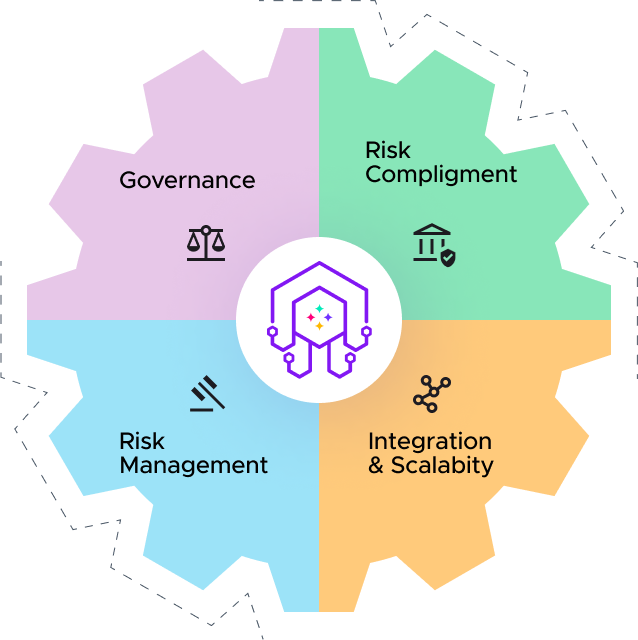
IT Governance, Risk and Compliance Management
Information technology supports nearly every part of a modern organisation, from customer services and financial operations to communications and decision-making. As reliance on technology grows, so do the risks associated with it. Cyber-attacks, system failures, data breaches and regulatory penalties can all disrupt operations and damage trust.
IT governance, risk and compliance management—often shortened to IT GRC—provides a structured way to oversee technology, manage uncertainty and meet relevant obligations. When these activities work together, organisations can make better-informed decisions, protect important systems and demonstrate responsible use of technology.
What Is IT Governance?
IT governance is the system of leadership, policies and processes used to ensure that technology supports an organisation’s goals. It clarifies who makes IT decisions, who is accountable for them and how their impact is assessed.
Effective governance helps an organisation set priorities, allocate resources and measure the value of technology investments. It also encourages clear ownership of systems and information, so that decisions are not made in isolation from wider business needs.
Understanding IT Risk Management
IT risk management involves identifying, assessing and treating events that could affect the confidentiality, integrity or availability of information and technology. Risks may arise from external threats, internal mistakes, ageing systems, third-party suppliers or changes to business operations.
A practical risk management process usually includes:
- Identifying risks: Recognising potential threats and weaknesses across systems, people, data and suppliers.
- Assessing impact and likelihood: Estimating how probable a risk is and what the consequences could be.
- Prioritising risks: Directing attention to the risks that could cause the greatest harm.
- Choosing a response: Reducing, transferring, avoiding or consciously accepting each risk.
- Monitoring changes: Reviewing risks regularly as technology, threats and business requirements evolve.
Risk management is not about eliminating every possible threat. That would rarely be achievable or cost-effective. Instead, it helps decision-makers understand exposure and choose safeguards that are proportionate to the potential impact.
What Does Compliance Management Involve?
Compliance management helps an organisation understand and meet the laws, regulations, contractual requirements and internal policies that apply to its technology and information. Requirements vary by sector, location and business activity, so organisations need to identify which obligations are relevant to them.
Compliance is more than maintaining documents for an audit. It involves putting suitable controls into practice, keeping evidence that those controls operate as intended and addressing weaknesses when they are found. Depending on the organisation, this may include controls for data protection, access management, record-keeping, supplier oversight and incident response.
Why Bring Governance, Risk and Compliance Together?
Governance, risk and compliance are closely connected, but they are sometimes managed by separate teams using different processes. This can lead to duplicated work, inconsistent reporting and gaps in accountability.
An integrated IT GRC approach creates a shared view of requirements, risks and controls. For example, a single security control may help reduce the risk of unauthorised access while also supporting several compliance obligations. Linking these elements makes it easier to understand why a control exists, who is responsible for it and whether it is working.
Well-coordinated IT GRC can help organisations to:
- Make technology decisions that support strategic objectives.
- Identify and address significant risks earlier.
- Improve accountability for systems, data and controls.
- Prepare more efficiently for audits and regulatory reviews.
- Reduce duplicated effort across departments.
- Build confidence among customers, partners and other stakeholders.
How to Establish an Effective IT GRC Programme
Understand the organisation’s objectives and obligations
Start by identifying business priorities, critical services, important information assets and applicable requirements. This gives the programme a clear purpose and helps prevent it from becoming a collection of disconnected policies.
Define roles and accountability
Set out who owns key systems, risks and controls. Responsibilities may be shared between IT, information security, legal, compliance, procurement and business teams, but decision-making authority should be clear.
Assess risk and existing controls
Compare current practices with the organisation’s needs and obligations. Identify where controls are effective, where evidence is missing and where improvements are required. Prioritise actions according to risk rather than treating every gap as equally urgent.
Establish practical policies and procedures
Policies should explain the organisation’s expectations, while procedures should show people how to meet them. Keep documentation clear, current and relevant to the work being done. Policies that are difficult to understand or follow are unlikely to be effective.
Monitor performance and report clearly
Use meaningful measures to track risks, incidents, control performance and remediation work. Reports should be tailored to their audience: operational teams need actionable detail, while senior leaders need a clear view of significant exposures and decisions.
Review and improve
IT GRC is an ongoing process, not a one-off project. Review it when the organisation changes its systems, services or suppliers, and after significant incidents or audit findings. Lessons learned should lead to practical improvements.
The Role of Technology
GRC platforms and security tools can help teams maintain risk registers, map controls to requirements, assign tasks and collect evidence. Automation may also reduce repetitive work, such as reminders, approval workflows and routine reporting.
Technology is an enabler, not a substitute for sound judgement. A tool cannot decide an organisation’s risk appetite, resolve unclear accountability or make unsuitable controls effective. Successful programmes combine appropriate technology with skilled people and well-designed processes.
Common Challenges
Organisations may struggle with fragmented information, unclear ownership, limited resources or an excessive focus on passing audits. Another common challenge is treating compliance as a checklist rather than considering whether controls genuinely reduce risk.
These issues can be addressed by keeping the programme proportionate, assigning clear ownership and focusing on outcomes. Senior leaders should support the work, but responsibility for effective IT GRC also needs to be embedded across the organisation.
Conclusion
IT governance, risk and compliance management helps organisations make responsible technology decisions, understand their exposure and meet their obligations. By bringing governance, risk and compliance together, organisations can reduce duplication, strengthen oversight and respond more effectively to change.
The most effective IT GRC programmes are practical and continually reviewed. They connect technology decisions to business goals, focus attention on the risks that matter most and make accountability part of everyday operations.
Six Benefits of IT Governance, Risk and Compliance Management
- Aligns IT with business goals.
- Helps identify risks early.
- Supports regulatory compliance.
- Clarifies roles and accountability.
- Improves audit readiness.
- Builds stakeholder trust.
7 Drawbacks of IT Governance, Risk and Compliance Management
- Can be costly to implement.
- May create administrative overhead.
- Can slow decision-making.
- Requires ongoing staff training.
- Policies may become overly complex.
- Poor data can undermine risk assessments.
- Compliance can become a box-ticking exercise.
Aligns IT with business goals.
One of the key benefits of IT governance, risk and compliance management is that it aligns technology decisions with business goals. By setting clear priorities, responsibilities and measures of success, it helps ensure that IT investments support the organisation’s wider strategy, rather than operating in isolation. This can improve the use of resources, guide planning and help teams focus on technology projects that deliver genuine business value.
Helps identify risks early.
One of the key benefits of IT governance, risk and compliance management is that it helps organisations identify risks early. Regular assessments, clear reporting and defined responsibilities make it easier to spot vulnerabilities, emerging threats and gaps in controls before they develop into serious incidents. This gives teams more time to take proportionate action, reduce potential disruption and protect important systems and data.
Supports regulatory compliance.
IT governance, risk and compliance management supports regulatory compliance by helping organisations identify the rules that apply to their operations and translate them into clear policies, responsibilities and controls. Regular monitoring and documented evidence make it easier to spot gaps, address issues promptly and demonstrate compliance during audits or regulatory reviews. This structured approach can reduce the risk of penalties and help build trust with customers, partners and regulators.
Clarifies roles and accountability.
IT governance, risk and compliance management clarifies who is responsible for technology decisions, security controls and regulatory obligations. When roles and accountability are clearly defined, staff know what is expected of them, issues can be escalated to the right people, and important tasks are less likely to be overlooked. This shared understanding also helps leaders monitor progress and hold teams accountable for managing risks effectively.
Improves audit readiness.
IT governance, risk and compliance management improves audit readiness by keeping policies, controls, responsibilities and supporting evidence organised and up to date. Rather than gathering information at the last minute, teams can use consistent processes to track compliance, document decisions and address control gaps throughout the year. This makes audits more efficient, helps reduce disruption to daily operations and enables the organisation to respond to auditors’ requests with greater confidence.
Builds stakeholder trust.
IT governance, risk and compliance management builds stakeholder trust by showing that an organisation takes its responsibilities seriously. Clear oversight, well-managed risks and consistent compliance help protect sensitive information, support reliable services and demonstrate accountability. This can give customers, employees, suppliers, regulators and investors greater confidence that the organisation is managing technology responsibly and is prepared to address problems when they arise.
Can be costly to implement.
Implementing IT governance, risk and compliance management can be costly, particularly for organisations that need to invest in specialist software, external advice, staff training and additional personnel. Ongoing costs may also arise from maintaining controls, monitoring compliance and updating processes as regulations and technology change. For smaller organisations, these expenses can place pressure on budgets, so it is important to prioritise measures according to the level of risk and the organisation’s resources.
May create administrative overhead.
One potential drawback of IT governance, risk and compliance management is the administrative overhead it can create. Maintaining policies, documenting controls, collecting evidence and preparing reports all take time and resources, particularly when requirements overlap or processes are overly complex. If the programme is not proportionate to the organisation’s size and risk profile, staff may spend more time completing paperwork than addressing genuine security and operational issues. Keeping processes streamlined and automating routine tasks can help reduce this burden.
Can slow decision-making.
One potential drawback of IT governance, risk and compliance management is that it can slow decision-making. Multiple approval stages, risk assessments and compliance checks may delay projects or prevent teams from responding quickly to changing business needs. This is especially likely when responsibilities are unclear or processes are overly complex. Organisations can reduce delays by setting proportionate controls, defining decision-making authority and streamlining routine approvals without compromising essential oversight.
Requires ongoing staff training.
A key drawback of IT governance, risk and compliance management is the need for ongoing staff training. Policies, regulations, systems and cyber threats change over time, so employees must regularly update their knowledge and understand how requirements apply to their roles. This takes time and resources, and training can disrupt day-to-day work. Without continued, relevant training, however, staff may misunderstand procedures or fail to follow controls, weakening the organisation’s overall GRC programme.
Policies may become overly complex.
One potential drawback of IT governance, risk and compliance management is that policies may become overly complex. When requirements are written in dense or technical language, or procedures involve too many approval steps, employees may find them difficult to understand and follow. This can slow down routine work, create confusion about responsibilities and encourage people to treat compliance as a box-ticking exercise. Policies should therefore be clear, proportionate and regularly reviewed so they remain practical as well as effective.
Poor data can undermine risk assessments.
Poor-quality, incomplete or outdated data can undermine risk assessments by giving decision-makers an inaccurate picture of an organisation’s exposure. Risks may be overlooked, incorrectly prioritised or judged using assumptions that no longer reflect current systems and business activities. This can lead to ineffective controls, wasted resources and a false sense of security. Regularly checking data accuracy, assigning clear ownership and updating risk information as circumstances change can help reduce this problem.
Compliance can become a box-ticking exercise.
One drawback of IT governance, risk and compliance management is that compliance can become a box-ticking exercise. When teams focus mainly on completing checklists or preparing evidence for audits, they may meet formal requirements without addressing the underlying risks. This can create a false sense of security, particularly if policies and controls are not properly understood or followed in day-to-day work. To avoid this, organisations should treat compliance as an ongoing way to improve security and decision-making, rather than simply a task to complete.