
Contract Compliance Management Software: A Practical Guide
Contracts set out the obligations, standards and expectations that shape relationships with suppliers, customers, partners and employees. But signing an agreement is only the beginning. Organisations must also track deadlines, check that each party meets its obligations, manage changes and keep reliable records. Contract compliance management software helps bring these activities together in one place.
What is contract compliance management software?
Contract compliance management software is a digital system for monitoring whether contractual obligations are being met. It can help teams organise agreements, assign responsibilities, track key dates and record evidence of compliance. Depending on the product, it may also support contract creation, approval workflows, renewals, reporting and links to other business systems.
The software is used across a range of agreements, including supplier contracts, service-level agreements, customer terms, leases and regulatory commitments. Its purpose is not to replace legal or commercial judgement, but to make it easier to understand what a contract requires and act on that information.
Why contract compliance matters
Contractual obligations can be detailed and spread across multiple documents. A business may need to monitor delivery targets, insurance certificates, payment terms, audit rights, data protection requirements, renewal windows or performance measures. If these details are stored in separate files or managed through personal reminders, important tasks can be overlooked.
Missed obligations may lead to service disruption, disputes, unexpected costs or reputational damage. Poorly managed renewal dates can also result in unwanted extensions or missed opportunities to renegotiate terms. A structured compliance process helps organisations identify responsibilities early and respond before issues escalate.
How the software helps
Centralises contract information
A central repository makes it easier to locate current agreements and related documents. Users can search for contracts by supplier, department, date, status or other relevant fields, rather than relying on scattered folders and email threads. Access controls can help ensure that sensitive information is available only to authorised users.
Tracks obligations and key dates
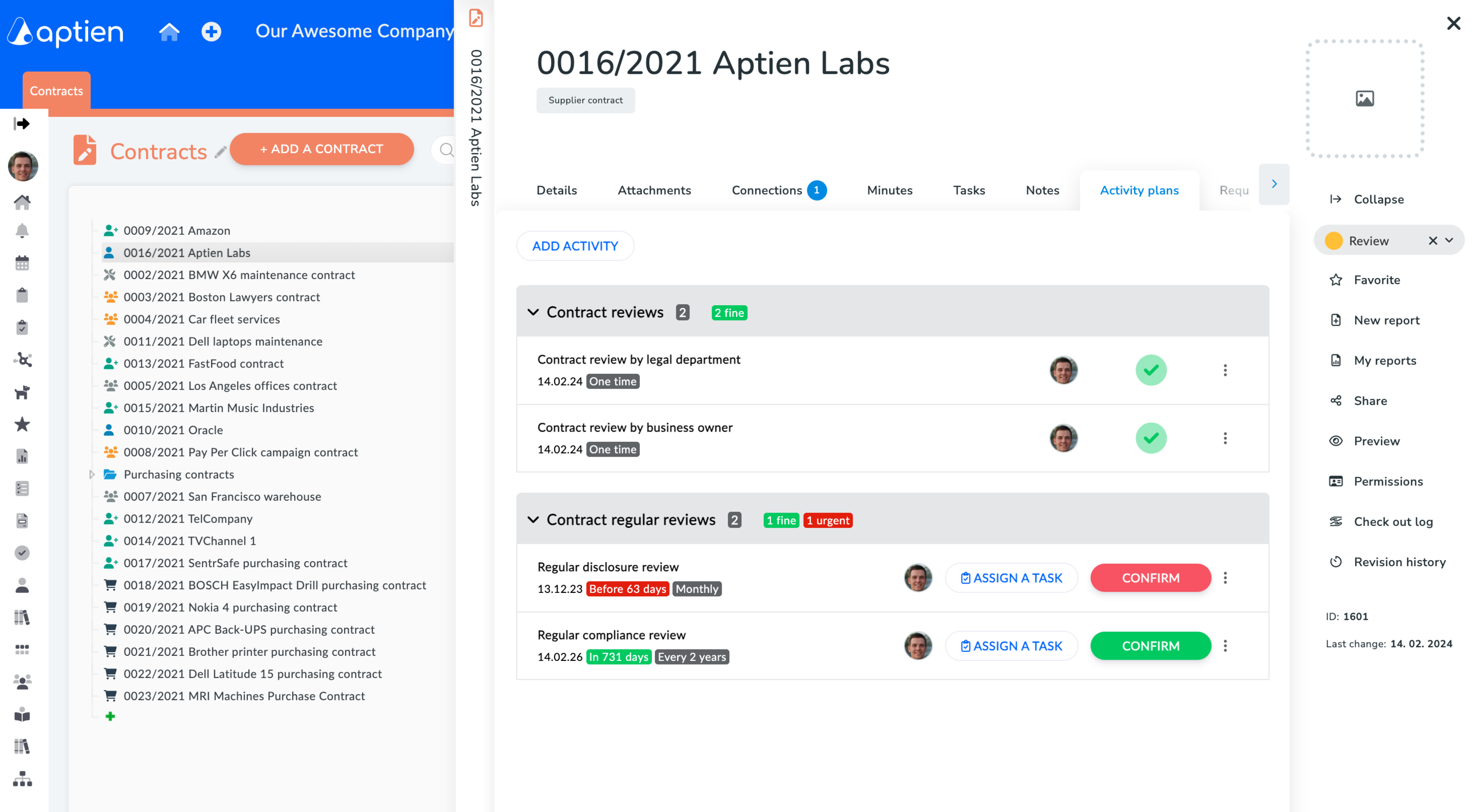
Teams can record obligations such as reporting deadlines, service reviews, insurance renewals and notice periods. Automated reminders may alert the relevant people before a deadline, giving them time to gather evidence, follow up with a counterparty or seek legal advice.
Assigns responsibility
Each obligation can be linked to an owner, team or business function. Clear ownership makes it easier to see who is responsible for taking action and reduces the risk of tasks being overlooked because responsibility is unclear.
Supports evidence and audit trails
Compliance often depends on being able to show what happened, when it happened and who approved or completed an action. Software can help teams store supporting documents, correspondence and activity records alongside the relevant contract. This can make internal reviews and audits more efficient.
Highlights risk and performance issues
Reporting tools can give managers an overview of overdue actions, upcoming renewals, recurring exceptions and supplier performance. These insights can help organisations prioritise follow-up and identify patterns that may require changes to processes or contract terms.
Features to consider
The right feature set will depend on an organisation’s size, contract volume and risk profile. When assessing potential solutions, consider whether the software offers:
- A searchable, secure contract repository
- Obligation tracking with owners, deadlines and status updates
- Configurable alerts for milestones, renewals and notice periods
- Document version control and approval workflows
- Role-based access and a clear activity history
- Reporting dashboards and exportable records
- Integration with systems such as procurement, finance or customer relationship management platforms
- Options for importing existing contracts and extracting key information
- Appropriate data security, retention and access controls
Automated data extraction and artificial intelligence features may reduce manual work, but extracted information should be checked by a qualified person. Contract wording can be nuanced, and automated tools may not interpret every obligation correctly.
How to choose the right solution
Start by reviewing how contracts are currently created, stored and monitored. Identify where delays or missed actions occur, which teams need access, and what types of obligations require the closest oversight. This helps define the practical requirements for a new system.
It is also worth involving legal, procurement, finance, operations, information security and other relevant stakeholders in the selection process. They may have different needs around approvals, reporting, data access and integrations. Demonstrations should use realistic examples from the organisation’s own workflows wherever possible.
Before committing, consider the full cost of ownership, including implementation, data migration, training, ongoing administration and support. Check how the provider handles security, backups, data residency and product updates. A solution should fit established processes where sensible, while still helping the organisation improve weak or inconsistent practices.
Planning a successful implementation
Software alone does not guarantee compliance. A successful implementation needs clear processes and active ownership. Begin with a manageable group of contracts or a specific business area, then refine the approach before expanding to the wider organisation.
- Set clear objectives. Decide what the organisation wants to improve, such as renewal visibility, obligation ownership or audit preparation.
- Standardise key information. Agree which contract details and obligation types should be recorded and how they will be categorised.
- Clean and migrate records. Remove duplicates where appropriate, confirm which agreements are current and check the quality of imported data.
- Assign owners. Make responsibility for each obligation explicit, including who provides cover when the usual owner is unavailable.
- Train users. Show teams how to find contracts, update status, attach evidence and escalate concerns.
- Review performance. Monitor usage and outcomes, gather feedback and adjust workflows as requirements change.
Common challenges
Organisations may encounter incomplete records, inconsistent naming conventions or uncertainty about which contracts are still active. These issues can undermine reporting if they are not addressed during implementation. Adoption can also be difficult when staff see the system as additional administration rather than part of their normal work.
To address these challenges, keep the process straightforward, explain how the software supports each team and avoid collecting information that has no clear purpose. Regular reviews can help keep records accurate. It is also important to establish an escalation process for missed obligations, disputed interpretations and potential breaches.
Measuring success
Useful measures may include the proportion of active contracts recorded in the system, the number of obligations with an assigned owner, overdue actions, renewal deadlines identified in advance and the time needed to prepare for an audit. Organisations can also monitor user adoption and the frequency of data corrections.
Measures should reflect business outcomes, not simply the amount of information entered. For example, improved visibility of renewal dates may be valuable if it gives teams enough time to review commercial terms and make informed decisions.
Conclusion
Contract compliance management software can help organisations move from scattered documents and informal reminders to a more consistent way of managing obligations. By centralising contract information, assigning responsibility and highlighting important dates, it can support better oversight and more timely action.
The best results come from combining suitable software with clear processes, reliable data and engaged users. With those foundations in place, organisations can manage contractual commitments more confidently and make it easier to demonstrate how they are meeting them.
5 Tips for Effective Contract Compliance Management Software Use
- Automate alerts for key dates and renewals.
- Keep contract versions and approvals in one place.
- Set clear roles for reviewing and approving contracts.
- Track obligations and assign owners.
- Review access controls and audit logs regularly.
Automate alerts for key dates and renewals.
Automating alerts for key dates and renewals helps ensure important contract deadlines do not get lost among day-to-day tasks. Contract compliance management software can notify the right people in advance about milestones such as renewal windows, notice periods, insurance expiry dates and reporting deadlines. Set reminders early enough for teams to review the agreement, gather required information and decide whether to renew, renegotiate or end the contract. Assigning each alert to a named owner also makes follow-up clearer and reduces the risk of missed obligations or unwanted automatic renewals.
Keep contract versions and approvals in one place.
Keep every contract version and its approval record in one secure, central location. A clear version history helps teams identify the current agreement, see what has changed and avoid relying on outdated drafts. Recording who reviewed and approved each version also creates a useful audit trail, supports accountability and makes it easier to resolve questions about how the final terms were agreed.
Set clear roles for reviewing and approving contracts.
Set clear roles for reviewing and approving contracts so everyone knows who is responsible at each stage. Define which teams—such as legal, finance, procurement and information security—need to review particular terms, and identify who has final approval authority. Contract compliance management software can route agreements to the right people, track progress and keep a record of decisions. Clear ownership helps prevent delays, reduces the risk of unauthorised commitments and makes it easier to confirm that contracts meet organisational requirements before they are signed.
Track obligations and assign owners.
Track each contractual obligation in your contract compliance management software, including its deadline, status and any evidence required. Assign a named owner to every task so responsibilities are clear and follow-up does not fall through the cracks. Automated reminders can help owners act on time, while managers gain a clear view of overdue actions and upcoming commitments.
Review access controls and audit logs regularly.
Review access controls and audit logs regularly to ensure that only authorised people can view or change contract information. As roles change, update permissions promptly and remove access that is no longer needed. Periodically check audit logs for unusual activity, unauthorised changes or gaps in record-keeping. These checks help protect sensitive data, support accountability and provide a clearer record of how contractual obligations are managed.