
One Identity Access Management: A Guide for Modern Organisations
Managing who can access systems, applications and data is a fundamental part of protecting an organisation. As businesses adopt cloud services, support remote working and maintain complex IT environments, keeping access secure and appropriate becomes increasingly challenging. One Identity provides identity and access management (IAM) solutions designed to help organisations manage digital identities, control permissions and strengthen security.
What is One Identity Access Management?
One Identity is a provider of identity security software. Its products help organisations manage user accounts and access across environments such as Microsoft Active Directory, cloud platforms, business applications and privileged systems. Depending on an organisation’s needs, One Identity solutions can support identity governance, access management, privileged access management and directory administration.
Rather than treating access as a collection of unrelated accounts, IAM brings identity information and access decisions into a more structured process. This can help organisations understand who has access to what, why that access was granted and whether it is still required.
Why identity and access management matters
Every employee, contractor, service account and administrator may need access to digital resources. If accounts are created without consistent oversight, permissions can accumulate over time. Former employees may retain active accounts, users may have more access than their roles require, and privileged credentials may not receive sufficient protection.
These issues can increase the risk of data exposure, misuse and disruption. They can also make audits and compliance checks more difficult. A well-planned IAM programme helps organisations apply consistent controls throughout the identity lifecycle, from account creation to access changes and removal.
Key capabilities
Identity lifecycle management
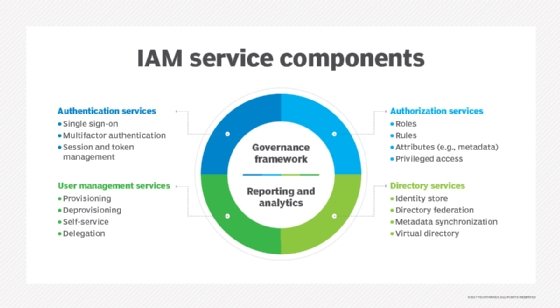
Identity lifecycle processes help ensure that access is updated when someone joins, changes role or leaves an organisation. Automating appropriate tasks can reduce manual administration and help limit the time that unnecessary accounts or permissions remain active.
Access governance
Access governance supports the review and management of permissions. Managers and system owners can be asked to confirm whether users still need particular access. Clear review processes can help identify excessive permissions and provide evidence for internal or external audits.
Privileged access management
Administrator and other high-level accounts require special protection because they can make significant changes to systems and data. Privileged access management can help organisations control, monitor and review the use of these accounts, reducing reliance on shared or permanently elevated credentials.
Directory and account administration
Many organisations rely on directories such as Microsoft Active Directory to manage users, groups and computers. Directory administration tools can help IT teams manage changes more consistently, delegate routine tasks and keep a clearer record of administrative activity.
Access across hybrid environments
Organisations often use a combination of on-premises infrastructure and cloud services. IAM tools can help bring greater consistency to access management across these environments, although the precise coverage depends on the products selected, integrations and configuration.
Benefits for organisations
One Identity solutions may help organisations improve visibility of user access, apply more consistent approval processes and reduce repetitive administrative work. By bringing identity-related processes under stronger control, security teams can focus more effectively on risky accounts and unusual access patterns.
IAM can also support compliance by making it easier to document access decisions and demonstrate that permissions are reviewed. However, technology alone cannot guarantee compliance or prevent every security incident. Good results depend on well-defined policies, accurate identity data and regular oversight.
Planning an implementation
Before selecting or deploying an IAM solution, organisations should map their current identity environment. This includes identifying key directories, applications, user groups, privileged accounts and existing approval processes. It is also important to decide which problems need to be addressed first, such as slow account provisioning, excessive permissions or limited audit visibility.
A phased implementation is often easier to manage than trying to automate every process at once. Organisations can begin with a high-impact area, test workflows with a representative group and refine policies before expanding. Integration requirements, data quality, licensing, staff responsibilities and ongoing maintenance should all be considered during planning.
Choosing the right approach
The right One Identity products and configuration will depend on an organisation’s size, infrastructure, regulatory obligations and security priorities. A solution that works well in one environment may not be suitable for another. Buyers should assess product capabilities against specific requirements, confirm integration needs and consider how administrators and end users will interact with the system.
It is also worth establishing how success will be measured. Useful indicators might include the time taken to grant or remove access, the number of outstanding access reviews, the volume of privileged accounts and the frequency of accounts with excessive permissions.
Conclusion
One Identity Access Management refers to a set of identity security capabilities that can help organisations manage accounts, permissions and privileged access more effectively. When supported by clear policies and regular reviews, IAM can improve visibility, simplify administration and strengthen control over access to important systems and data.
The most effective approach starts with a clear understanding of the organisation’s identity environment and security objectives. Technology can then support consistent processes that keep access appropriate as people, roles and business systems change.
One Identity and Access Management: Frequently Asked Questions
- What is one IAM?
- What is the one identity manager?
- What are the 5 pillars of IAM?
- What is an identity access management system?
- What is the most commonly used IAM tool?
- Who is the owner of One Identity?
What is one IAM?
One IAM (Identity and Access Management) is a unified approach to managing digital identities and controlling access to an organisation’s systems, applications and data. It helps ensure that each user has the appropriate permissions for their role, and that access can be granted, reviewed or removed as circumstances change. One Identity is also the name of a company that provides identity security products, so “One IAM” may refer either to identity and access management generally or to One Identity’s IAM solutions.
What is the one identity manager?
One Identity Manager is an identity governance and administration (IGA) platform that helps organisations manage digital identities and access rights across systems, applications and infrastructure. It can automate tasks such as creating, updating and removing user accounts, support access approval and review processes, and provide visibility of who has access to particular resources. Its capabilities depend on the products and configuration in use, but the overall aim is to help organisations manage access more consistently and support security and compliance requirements.
What are the 5 pillars of IAM?
The five pillars of Identity and Access Management (IAM) are commonly described as identity lifecycle management, authentication, authorisation, access governance and auditing. Together, they cover the full access journey: creating and updating digital identities, verifying that users are who they claim to be, determining what they are allowed to do, reviewing whether their permissions remain appropriate, and recording access activity for monitoring and compliance. Frameworks may group these areas differently, but the aim is the same: to ensure the right people have the right access to the right resources at the right time.
What is an identity access management system?
An identity and access management (IAM) system is a set of tools and processes used to manage digital identities and control access to an organisation’s systems, applications and data. It helps ensure that people have the permissions they need for their roles—and that access is updated or removed when those needs change. IAM systems can also support authentication, access reviews and audit reporting, helping organisations improve security and manage access more consistently.
What is the most commonly used IAM tool?
There is no single IAM tool used by every organisation, as the choice depends on its systems, size and security requirements. Microsoft Entra ID is widely used, particularly by organisations that rely on Microsoft 365 and Azure, while Okta and One Identity are also used for identity and access management. The best option is the one that integrates with your environment and supports your needs for user access, authentication, governance and security.
Who is the owner of One Identity?
One Identity is part of Quest Software, a provider of IT management and cybersecurity solutions. It develops identity and access management products that help organisations manage users, permissions and privileged access. For the latest information about its corporate ownership, refer to Quest Software’s official company information.