
Cybersecurity as a Service Companies: What They Offer and How to Choose One
Cybersecurity as a service companies help organisations protect their systems, data and users through outsourced or subscription-based security services. Instead of building every capability in-house, a business can work with a specialist provider for support with areas such as threat monitoring, incident response, vulnerability management and security advice.
These services can be useful for organisations that lack the time, expertise or resources to manage every aspect of cybersecurity themselves. However, providers differ considerably in their services, expertise and approach. Understanding what they offer—and what your organisation needs—is essential before choosing one.
What is cybersecurity as a service?
Cybersecurity as a service (often shortened to CaaS) is a model in which an external provider delivers security capabilities on an ongoing basis. Services may be delivered remotely, through cloud-based tools, by security specialists, or through a combination of these approaches.
The term covers a broad range of offerings. Some companies focus on a single area, such as penetration testing or security awareness training. Others provide a wider managed security service, combining technology, monitoring and expert support.
Common services offered
- Managed detection and response: Monitoring systems for suspicious activity and helping investigate and respond to potential threats.
- Security operations centre services: Providing access to analysts and monitoring capabilities that may be difficult to maintain internally.
- Vulnerability management: Identifying and prioritising weaknesses in systems, applications and configurations.
- Penetration testing: Assessing the security of systems by testing them for exploitable weaknesses within an agreed scope.
- Cloud security: Reviewing and helping protect cloud environments, accounts, workloads and configurations.
- Identity and access management: Supporting controls such as multi-factor authentication, privileged access management and access reviews.
- Incident response: Providing guidance or hands-on support when a security incident occurs.
- Security awareness training: Helping employees recognise common threats, including phishing and social engineering.
- Compliance support: Assisting with security controls, documentation and assessments linked to relevant standards or regulations.
The exact scope varies by provider. A service described as “24/7 monitoring”, for example, may not include round-the-clock investigation or response unless this is clearly stated in the contract.
Why organisations use cybersecurity service providers
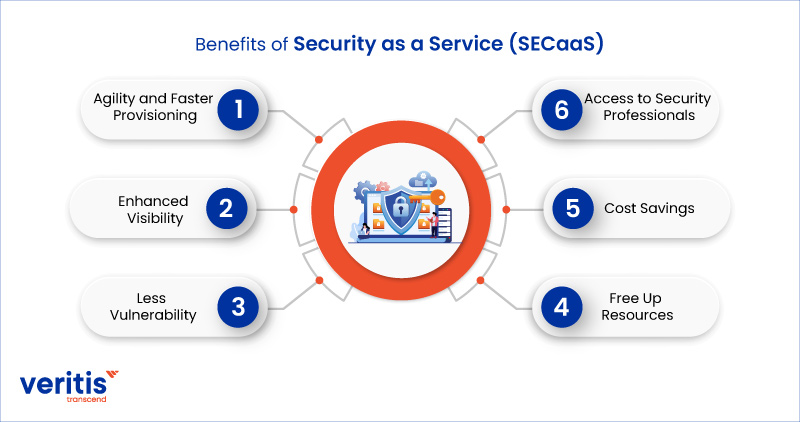
One of the main reasons to use a provider is access to specialist skills. Recruiting and retaining experienced security professionals can be challenging, particularly for smaller organisations. A service provider may offer access to a broader team and a range of security tools.
Outsourcing can also make security costs more predictable. Rather than investing in every tool and capability upfront, an organisation may pay a regular fee for an agreed service. This does not automatically make outsourcing cheaper, so the full cost—including implementation, additional services and contract changes—should be assessed.
External support can help an organisation improve its ability to detect and respond to threats. It can also allow internal IT teams to focus on other priorities. However, outsourcing does not transfer all responsibility for security. The organisation still needs to set priorities, manage access, understand its risks and oversee the provider’s work.
How to choose a cybersecurity as a service company
Start with your needs and risks
Identify the systems and information that matter most, the risks the organisation needs to address, and any existing gaps in security. A clear scope makes it easier to compare providers and avoid paying for services that do not meet your needs.
Check the service boundaries
Ask what is included, what is excluded and what happens when a potential incident is detected. Confirm monitoring hours, escalation routes, response times, reporting frequency and who is authorised to take action. Make sure these details are documented rather than relying on broad descriptions in marketing material.
Assess expertise and fit
Look at the provider’s experience with organisations of a similar size, sector and technical environment. Ask who will deliver the service, how issues are escalated and whether the team has relevant qualifications or recognised assurance. References and practical examples can help, while still respecting client confidentiality.
Understand data handling and access
A provider may need access to sensitive systems, logs or personal data. Find out where information is stored, who can access it, how it is protected and how long it is retained. Review the provider’s approach to subcontractors, data breaches and secure deletion at the end of the relationship.
Review reporting and performance measures
Useful reporting should explain findings in a way that supports decisions, not simply list alerts. Agree how the provider will measure performance, communicate risk and track remediation. Reports should help the organisation understand what needs attention and whether agreed actions have been completed.
Check contracts and exit arrangements
Review service levels, fees, renewal terms and provisions for changing or ending the service. Confirm how data, configurations and documentation will be returned or securely removed if the contract ends. A well-defined exit plan helps prevent unnecessary disruption and supplier dependence.
Potential challenges to consider
Cybersecurity as a service is not a substitute for good internal governance. Poorly defined responsibilities can create gaps, particularly during an incident. Organisations should know who makes decisions, who contacts relevant stakeholders and who is responsible for recovery.
There can also be integration challenges. A provider’s tools and processes need to work with existing systems, cloud platforms and internal procedures. Before signing, discuss implementation requirements and any changes needed to achieve effective coverage.
Finally, no provider can guarantee that an organisation will never experience a cyber incident. The aim is to reduce risk, improve visibility and strengthen the ability to respond and recover—not to promise complete protection.
Making the partnership work
A successful relationship depends on regular communication and clear ownership. Share accurate information about systems and changes, review findings promptly, and make sure recommended fixes are assigned to the right people. Schedule periodic reviews to check whether the service still matches the organisation’s needs.
Cybersecurity as a service companies can provide valuable expertise and ongoing support, particularly where internal resources are limited. The best choice is not necessarily the provider with the longest list of services. It is the one that understands the organisation’s risks, defines its responsibilities clearly and can demonstrate how its work will improve security in practice.
Essential Tips for Choosing a Cybersecurity as a Service Provider in the UK
- Check the provider’s security certifications and track record.
- Confirm exactly which services and systems are covered.
- Ask how quickly incidents are detected and handled.
- Review data storage locations and privacy safeguards.
- Check staff vetting, training and access controls.
- Agree clear service levels and reporting schedules.
- Test incident response plans together regularly.
- Understand fees, contract terms and exit options.
- Ensure the provider supports your regulatory obligations.
Check the provider’s security certifications and track record.
Check a provider’s security certifications and track record before signing a contract. Look for relevant, independently verified certifications, and confirm that they apply to the services you plan to use. Ask for evidence of experience with organisations similar to yours, along with references or case studies where available. Certifications can indicate that a provider follows recognised security practices, but they are not a guarantee of performance, so consider them alongside service quality, incident-handling processes and client feedback.
Confirm exactly which services and systems are covered.
Before engaging a cybersecurity as a service provider, confirm exactly which services and systems are covered. Check whether the agreement includes monitoring, investigation, incident response and reporting, and list the specific networks, devices, cloud platforms and applications in scope. Clarify any exclusions, coverage hours and additional charges so there are no gaps or surprises when support is needed.
Ask how quickly incidents are detected and handled.
Ask prospective cybersecurity as a service providers how quickly they can detect, investigate and respond to an incident. Clarify whether monitoring is continuous, what triggers an escalation and how quickly your team will be contacted. Check that response times are set out in the service agreement, including who is responsible for taking action. Fast, clearly defined processes can help limit disruption, but response times should be realistic and matched to the level of service you need.
Review data storage locations and privacy safeguards.
Review where a cybersecurity as a service provider stores and processes your data, including security logs, personal information and backups. Check which countries the data may be held in, who can access it, how it is protected and how long it is retained. Ask about encryption, access controls, subcontractors and procedures for reporting a data breach, and confirm that the provider’s safeguards meet your organisation’s privacy and regulatory requirements.
Check staff vetting, training and access controls.
Before choosing a cybersecurity as a service company, check how it vets and trains its staff, and how it controls their access to your systems and data. Ask whether background checks are carried out, how often security training is refreshed, and whether access is limited to the people who need it for their role. Strong controls—such as multi-factor authentication, privileged access management and regular access reviews—help reduce the risk of misuse or compromise.
Agree clear service levels and reporting schedules.
Agree clear service levels and reporting schedules before work begins. Specify expected response and resolution times, monitoring hours, escalation procedures and who to contact if an incident occurs. Set out how often the provider will report, what each report should include and how urgent issues will be communicated. Clear expectations make performance easier to assess and help ensure important risks are raised promptly.
Test incident response plans together regularly.
Test incident response plans regularly with your cybersecurity service provider to make sure everyone knows their role when an incident occurs. Run exercises based on realistic scenarios, such as a ransomware attack or compromised account, and practise how you will communicate, escalate the issue and coordinate containment and recovery. Review what went well and what needs improvement, then update the plan and contact details accordingly.
Understand fees, contract terms and exit options.
Before choosing a cybersecurity as a service provider, make sure you understand the full cost, including set-up fees, extra services and charges for changing the scope. Check the contract carefully for service levels, renewal dates, price increases and cancellation terms. It is also important to agree what happens if you leave: how your data and documentation will be returned or securely deleted, and how access to your systems will be removed. Clear terms and a practical exit plan can help you avoid unexpected costs and reduce disruption if you switch providers.
Ensure the provider supports your regulatory obligations.
Choose a cybersecurity as a service provider that understands the regulatory obligations relevant to your organisation and can help you meet them. Ask how its services support requirements for areas such as data protection, access controls, incident reporting and record-keeping, and request clear evidence of its processes and certifications where applicable. Confirm which responsibilities remain with your organisation, as outsourcing security does not transfer legal accountability.