
Cloud-Based Identity and Access Management
Cloud-based identity and access management (IAM) helps organisations control who can access their systems, applications and data. Instead of relying solely on identity tools hosted within an organisation’s own data centre, cloud IAM uses services delivered over the internet to manage identities and access policies across cloud, on-premises and hybrid environments.
As businesses adopt more cloud applications and support employees working from different locations, managing access through a central, consistent approach has become increasingly important. A well-planned cloud IAM strategy can strengthen security, simplify administration and improve the experience for users.
What is cloud-based IAM?
Identity and access management brings together the processes and technologies used to create and manage digital identities, verify users and determine what they are allowed to access. Cloud-based IAM delivers some or all of these capabilities through a cloud service.
Depending on the organisation and provider, a cloud IAM service may include:
- Identity management: creating, updating and removing user accounts and identity records.
- Authentication: confirming a user’s identity, for example with a password, an authenticator app or a security key.
- Authorisation: deciding which applications, resources and actions a user is permitted to access.
- Single sign-on (SSO): allowing users to access multiple connected applications through one sign-in process.
- Multi-factor authentication (MFA): requiring additional evidence of identity beyond a password.
- Access governance: reviewing permissions, enforcing policies and keeping records that support oversight and compliance.
How cloud IAM works
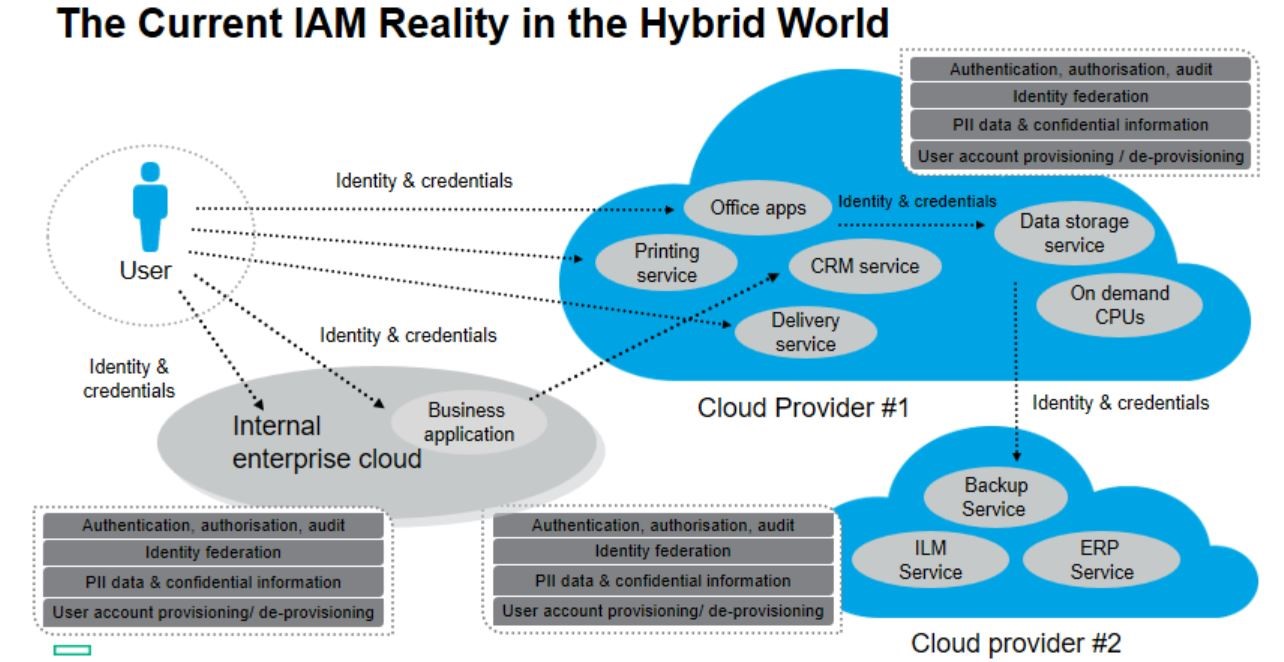
A cloud IAM platform acts as a central point for identity-related policies and services. When someone attempts to sign in to an application, the platform can verify their identity and assess whether access should be granted. Decisions may take account of details such as the user’s role, device, location, authentication method and the sensitivity of the resource.
Cloud IAM can connect with cloud services, business applications, directories and, in some cases, on-premises systems. This allows organisations to apply shared policies across different environments rather than managing each application independently.
Many organisations use a central identity provider alongside integrations based on standards such as SAML, OpenID Connect and OAuth. These integrations allow systems to exchange authentication or authorisation information, although the precise capabilities depend on the products involved and how they are configured.
Benefits of cloud-based IAM
Centralised access control
Central management can make it easier to apply consistent sign-in and access policies across a range of services. It also gives administrators a clearer view of accounts and permissions, including access that may otherwise be spread across separate applications.
Support for hybrid and remote working
Cloud IAM can help provide secure access to applications from different locations and devices. Policies can be designed to require stronger verification in higher-risk situations, while still allowing appropriate access for staff, contractors and partners.
Simpler user experience
Features such as SSO can reduce the number of separate passwords users need to remember. A smoother sign-in experience can also reduce repeated support requests relating to access and password resets.
More efficient account lifecycle management
Automating account changes can help ensure that access is updated when someone joins, changes role or leaves the organisation. Removing access promptly is particularly important when an account is no longer required.
Improved visibility and oversight
Centralised logs, access reviews and reporting can help security and IT teams understand how identities are being used. This information can support investigations, internal controls and relevant compliance activities.
Security considerations
Moving IAM capabilities to the cloud does not remove the need for careful security management. A cloud service can provide useful controls, but outcomes still depend on sound configuration, appropriate policies and clear operational responsibilities.
- Protect privileged accounts: limit administrative access, use strong authentication and review privileges regularly.
- Use MFA appropriately: require additional verification, especially for administrators and access to sensitive systems.
- Apply least privilege: give users only the permissions required for their work and review them as responsibilities change.
- Monitor sign-in activity: establish processes for identifying and responding to unusual or risky access patterns.
- Secure recovery processes: protect account recovery and helpdesk procedures, which can otherwise become a route around normal authentication controls.
- Plan for service disruption: understand the provider’s availability arrangements and define how essential work will continue if the service is unavailable.
Cloud IAM and compliance
Identity and access controls often contribute to an organisation’s wider security and compliance programme. Features such as access reviews, audit trails and role-based permissions may help demonstrate how access is managed. However, using a cloud IAM service does not by itself guarantee compliance. Organisations must assess their own legal, regulatory and contractual obligations, as well as the service’s data handling, retention and regional hosting arrangements.
Choosing a cloud IAM solution
The right solution depends on an organisation’s existing technology, security requirements and plans for the future. Before selecting a service, consider:
- Whether it integrates with current directories, applications and infrastructure.
- How it supports employees, contractors, customers or other identity groups.
- Which authentication methods and access policies are available.
- How administrative roles, audit logs and access reviews are managed.
- Where identity data is stored and how it is protected.
- What support, availability and recovery arrangements the provider offers.
- How pricing may change as the number of users or connected services grows.
A pilot with a limited group of users and applications can help uncover integration issues and test policies before a wider rollout. It is also useful to establish clear ownership between security, IT, application teams and business stakeholders.
Getting started with cloud-based IAM
A successful implementation begins with understanding the existing environment. Identify important applications, directories, user groups and privileged accounts, then document how access is currently granted and removed. This provides a basis for deciding which controls should be introduced first.
Many organisations begin by improving MFA coverage, consolidating sign-in for key applications and tightening administrative access. They can then expand towards automated onboarding and offboarding, regular access reviews and more context-aware policies. Policies should be tested carefully to avoid disrupting legitimate work, and users should be given clear guidance on any changes to the sign-in process.
Conclusion
Cloud-based identity and access management provides a practical way to manage access across modern, connected IT environments. By centralising identity controls, supporting strong authentication and automating routine processes, it can help organisations balance security with ease of use. Careful planning, ongoing monitoring and regular access reviews are essential to ensure that the service remains aligned with business needs and security requirements.
Enhancing Security and Efficiency: The Benefits of Cloud-Based Identity and Access Management
- Centralises access control across cloud and on-premises systems.
- Supports secure access for remote and hybrid teams.
- Single sign-on makes logins simpler for users.
- Multi-factor authentication helps protect accounts.
- Automates account updates when staff join, move or leave.
- Provides clearer access logs and audit visibility.
Challenges of Cloud-Based Identity and Access Management: Dependence, Security Risks, and Integration Complexities
- Relies on internet access and provider availability.
- Centralised identity services can become high-value targets.
- Integration and migration may be complex.
Centralises access control across cloud and on-premises systems.
Cloud-based identity and access management centralises access control across cloud and on-premises systems, giving organisations a consistent way to manage user identities and permissions. Rather than handling access separately in each environment, administrators can apply shared policies, review permissions from a more unified view and update access when someone joins, changes role or leaves. This can make day-to-day administration more efficient and help reduce the risk of accounts retaining unnecessary access.
Supports secure access for remote and hybrid teams.
Cloud-based identity and access management helps remote and hybrid teams securely access the applications they need from different locations and devices. Centralised sign-in policies, multi-factor authentication and checks based on factors such as user role or device can help protect company resources without relying on staff being in the office. This gives organisations a consistent way to manage access while supporting flexible working.
Single sign-on makes logins simpler for users.
Single sign-on (SSO) makes logging in simpler by allowing users to access multiple approved applications with one set of sign-in details. This means fewer passwords to remember and less time spent switching between accounts, helping users get to the tools they need more quickly. When combined with strong authentication and well-managed access policies, SSO can also make access easier to oversee without sacrificing security.
Multi-factor authentication helps protect accounts.
Multi-factor authentication (MFA) adds an extra layer of protection to user accounts by requiring more than just a password to sign in. For example, users may also need to confirm their identity through an authenticator app, a security key or a one-time code. This makes it harder for someone to gain access with a stolen or guessed password, helping protect business applications and data.
Automates account updates when staff join, move or leave.
Cloud-based identity and access management can automate account updates when staff join, change roles or leave an organisation. New employees can be given the access they need from the outset, while role changes can trigger appropriate permission updates. When someone leaves, their accounts and access can be disabled promptly, reducing the risk of unused accounts being misused and saving IT teams from repetitive manual tasks.
Provides clearer access logs and audit visibility.
Cloud-based identity and access management can provide clearer access logs and audit visibility by bringing sign-in activity, permission changes and account events together in one place. This makes it easier for authorised teams to see who accessed which systems, when access occurred and whether any unusual activity needs investigation. Centralised records can also support routine access reviews, security incident response and evidence gathering for audits. The level of detail available depends on the service and its configuration, so logging policies should be set up to meet the organisation’s security and retention requirements.
Relies on internet access and provider availability.
A key drawback of cloud-based identity and access management is its reliance on a working internet connection and the provider’s availability. If an organisation loses internet access, or the IAM provider experiences an outage, users may be unable to sign in to essential applications, even when those applications are otherwise operational. This can interrupt day-to-day work and delay access to critical services, so organisations should assess provider resilience and plan suitable fallback procedures.
Centralised identity services can become high-value targets.
A key drawback of cloud-based identity and access management is that centralised identity services can become high-value targets for attackers. If a provider account or identity platform is compromised, an attacker may gain access to multiple connected applications and systems. Organisations can reduce this risk by protecting administrator accounts with strong multi-factor authentication, limiting privileged access, monitoring sign-in activity and preparing a clear incident response plan.
Integration and migration may be complex.
Integrating cloud-based identity and access management with existing directories, applications and on-premises systems can be complex, particularly when older technologies or inconsistent identity records are involved. Migrating users and permissions also requires careful planning: errors can lead to duplicated accounts, inappropriate access or disruption to everyday work. Organisations may need specialist expertise, thorough testing and a phased rollout to ensure systems work together and users retain the access they need.