
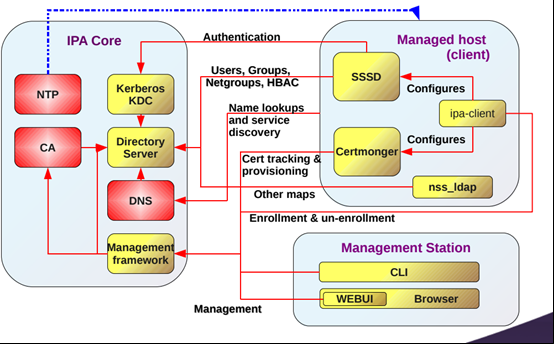
The Power of Red Hat Identity Management Server
Red Hat Identity Management Server is a robust and comprehensive solution designed to simplify and enhance identity management within an organisation’s IT infrastructure. With its array of features and capabilities, this server offers unparalleled control, security, and efficiency in managing user identities and access.
Key Features:
- User Authentication: Red Hat Identity Management Server provides secure authentication mechanisms, including single sign-on (SSO) and multi-factor authentication, ensuring only authorised users can access resources.
- Centralised User Management: Organisations can centrally manage user accounts, groups, roles, and policies across various systems and applications from a single console.
- Role-Based Access Control: Administrators can define roles with specific permissions, allowing for fine-grained control over who can access which resources.
- Certificate Management: The server supports certificate-based authentication and management, enabling secure communication between systems.
- Policy Enforcement: Organisations can enforce security policies consistently across the network, ensuring compliance with regulatory requirements.
Benefits of Red Hat Identity Management Server:
Implementing Red Hat Identity Management Server offers several benefits to organisations:
- Enhanced Security: By centralising identity management and enforcing access controls, organisations can significantly reduce the risk of unauthorised access and data breaches.
- Simplified Administration: The server streamlines user provisioning, deprovisioning, and access management tasks, saving time and effort for IT administrators.
- Improved Compliance: With robust auditing capabilities and policy enforcement features, organisations can easily demonstrate compliance with industry regulations.
- Better User Experience: Features like SSO enhance user convenience by reducing the need for multiple logins across different systems.
In Conclusion
Red Hat Identity Management Server is a powerful tool that addresses the complexities of identity management in modern IT environments. By leveraging its features and capabilities, organisations can strengthen their security posture, streamline operations, and ensure regulatory compliance. Embracing this solution is a step towards building a more secure and efficient IT infrastructure.
Top 5 Tips for Optimising Your Red Hat Identity Management Server
- Ensure to regularly update the Red Hat Identity Management server to the latest version for security patches and new features.
- Implement strong password policies and multi-factor authentication to enhance the security of user identities.
- Regularly review and audit user permissions and access controls to prevent unauthorized access.
- Back up the Identity Management server data regularly to avoid data loss in case of system failures.
- Provide adequate training for administrators and users on how to use the Identity Management server effectively.
Ensure to regularly update the Red Hat Identity Management server to the latest version for security patches and new features.
It is crucial to regularly update the Red Hat Identity Management server to the latest version to benefit from essential security patches and new features. By staying current with updates, organisations can enhance the server’s resilience against emerging threats and vulnerabilities, ensuring a more secure identity management environment. Additionally, updating to the latest version allows users to leverage new functionalities and improvements that can optimise performance and user experience within the IT infrastructure. Keeping the Red Hat Identity Management server up-to-date is a proactive measure that reinforces overall system integrity and helps mitigate potential risks effectively.
Implement strong password policies and multi-factor authentication to enhance the security of user identities.
By implementing strong password policies and enabling multi-factor authentication on the Red Hat Identity Management Server, organisations can significantly enhance the security of user identities. Strong password policies, such as requiring complex passwords and regular password changes, help mitigate the risk of unauthorised access through compromised credentials. Additionally, multi-factor authentication adds an extra layer of security by requiring users to verify their identity through multiple methods, such as a password and a unique code sent to their mobile device. These measures work in tandem to bolster the protection of user identities and strengthen overall security posture within the IT infrastructure.
Regularly review and audit user permissions and access controls to prevent unauthorized access.
Regularly reviewing and auditing user permissions and access controls on the Red Hat Identity Management Server is crucial to prevent unauthorised access to sensitive data and resources. By conducting thorough assessments of user privileges, organisations can identify and rectify any unnecessary or excessive permissions that may pose security risks. This proactive approach not only enhances the overall security posture of the IT infrastructure but also ensures compliance with regulatory requirements by maintaining a tight control over user access rights.
Back up the Identity Management server data regularly to avoid data loss in case of system failures.
It is crucial to regularly back up the data on the Red Hat Identity Management server to mitigate the risk of data loss in the event of system failures. By implementing a robust backup strategy, organisations can safeguard critical user identities, access controls, and configuration settings stored on the server. Regular backups ensure that in case of unexpected incidents or hardware malfunctions, data can be restored efficiently, minimising downtime and preserving the integrity of the identity management system. Prioritising regular backups is a proactive measure that enhances data resilience and reinforces the reliability of the Red Hat Identity Management server.
Provide adequate training for administrators and users on how to use the Identity Management server effectively.
It is crucial to provide sufficient training for administrators and users on utilising the Red Hat Identity Management server effectively. By offering comprehensive training sessions, both administrators and users can familiarise themselves with the server’s features, functionalities, and best practices. Adequate training ensures that administrators can configure and manage the server optimally, while users can navigate the system efficiently to access resources securely. Investing in training not only enhances overall system performance but also contributes to a smoother implementation process and increased user satisfaction.