
The Importance of GRC Audit Tools in Modern Businesses
In today’s rapidly evolving business landscape, organisations face increasing challenges in managing governance, risk, and compliance (GRC) effectively. To address these challenges, businesses are turning to GRC audit tools as essential components of their risk management strategies.
GRC audit tools play a crucial role in helping businesses streamline their processes, enhance transparency, and ensure adherence to regulatory requirements. These tools provide a comprehensive framework for managing risks, monitoring compliance with policies and regulations, and aligning business objectives with strategic goals.
Key Benefits of GRC Audit Tools:
- Efficiency: GRC audit tools automate manual processes, saving time and resources while improving accuracy in data collection and analysis.
- Compliance: By centralising compliance activities and providing real-time monitoring capabilities, GRC audit tools help businesses stay compliant with industry regulations and standards.
- Risk Management: These tools enable organisations to identify, assess, and mitigate risks proactively, reducing the likelihood of costly incidents or non-compliance issues.
- Reporting: GRC audit tools generate detailed reports that offer insights into the organisation’s risk profile, compliance status, and overall performance metrics.
- Integration: Many GRC audit tools can be integrated with existing systems and applications, allowing for seamless data sharing and collaboration across departments.
The Future of GRC Audit Tools:
As businesses continue to face complex regulatory environments and evolving cybersecurity threats, the demand for advanced GRC audit tools is expected to grow. Future innovations may include AI-driven analytics for predictive risk assessment, enhanced data visualisation capabilities for better decision-making, and increased automation to streamline compliance processes further.
In conclusion, GRC audit tools are indispensable assets for modern businesses seeking to navigate the complexities of governance, risk management, and compliance. By investing in robust GRC audit solutions, organisations can safeguard their operations, protect their reputation, and achieve sustainable growth in an increasingly regulated business environment.
Common Questions About GRC Audit Tools: Understanding Jira, Top Solutions, Key Components, and Available Options
- Is Jira a GRC tool?
- What is the best GRC tools?
- What are the 4 components of GRC?
- What are the GRC tools?
- What are some GRC tools?
Is Jira a GRC tool?
The question of whether Jira is a GRC tool is a common one among organisations looking to enhance their governance, risk, and compliance practices. While Jira is primarily known as a project management tool designed for software development teams, it can also be customised and integrated with plugins to support certain GRC functions. However, it is important to note that Jira may not offer the full suite of features typically found in dedicated GRC tools. Organisations evaluating Jira for GRC purposes should carefully assess its capabilities against their specific requirements to determine if it can effectively fulfil their governance, risk management, and compliance needs.
What is the best GRC tools?
When considering the question “What is the best GRC tool?”, it is important to understand that the answer may vary depending on the specific needs and requirements of an organisation. There is no one-size-fits-all solution when it comes to GRC tools, as different tools offer varying features, capabilities, and levels of customisation. The best GRC tool for a particular business will be one that aligns closely with its unique objectives, compliance needs, risk management strategies, and overall IT infrastructure. It is recommended for organisations to conduct thorough research, consider their specific use cases, and potentially engage in trials or demos to determine which GRC tool best fits their requirements and provides the most value in enhancing governance, risk management, and compliance processes.
What are the 4 components of GRC?
In the realm of GRC (Governance, Risk, and Compliance), the framework typically consists of four key components: Governance, Risk Management, Compliance Management, and Audit Management. Governance focuses on defining the organisation’s strategic goals and ensuring that policies and procedures align with these objectives. Risk Management involves identifying, assessing, and mitigating potential risks that could impact the organisation’s operations. Compliance Management entails adhering to relevant laws, regulations, and internal policies to maintain legal and ethical standards. Finally, Audit Management involves conducting regular assessments and evaluations to verify compliance with established guidelines and identify areas for improvement within the GRC framework. Each component plays a vital role in promoting transparency, accountability, and efficiency within an organisation’s GRC practices.
What are the GRC tools?
GRC tools, short for Governance, Risk, and Compliance tools, are software solutions designed to help organisations manage and monitor their governance, risk management, and compliance activities effectively. These tools provide a centralised platform for streamlining processes related to regulatory compliance, internal policies, and risk assessment. GRC tools typically offer functionalities such as policy management, risk identification and mitigation, audit trail tracking, compliance reporting, and dashboard visualisations to give businesses a comprehensive view of their GRC landscape. By leveraging GRC tools, companies can enhance transparency, efficiency, and accountability in their operations while ensuring alignment with industry regulations and best practices.
What are some GRC tools?
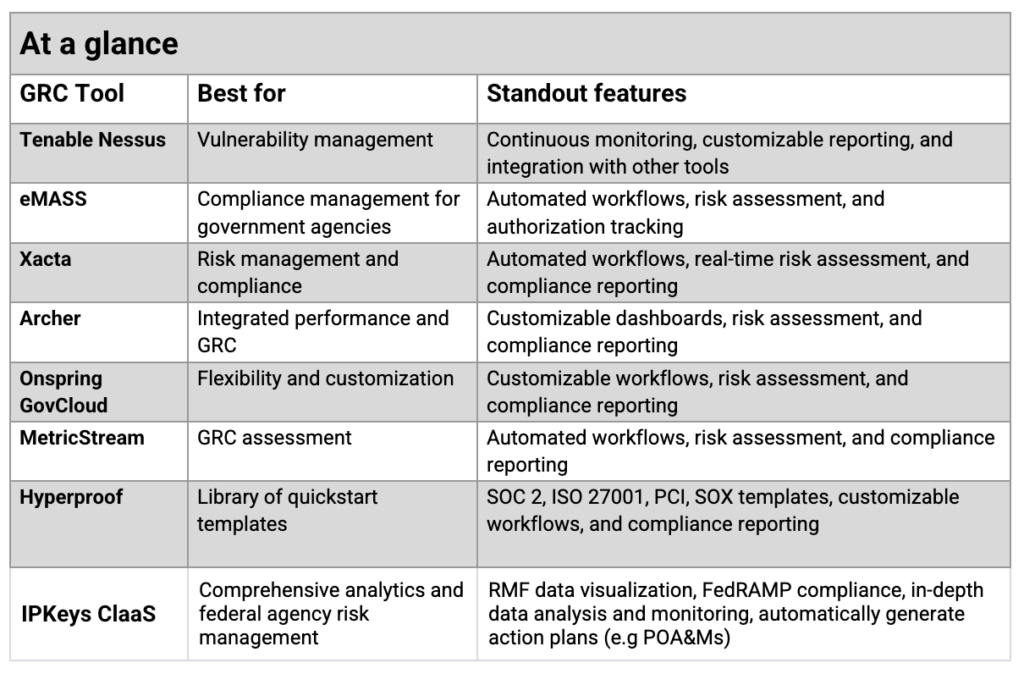
When it comes to Governance, Risk, and Compliance (GRC) tools, there is a diverse range of solutions available to meet the specific needs of businesses across various industries. Some commonly used GRC tools include software platforms such as SAP GRC, RSA Archer, MetricStream, and ServiceNow GRC. These tools offer functionalities for risk assessment, policy management, compliance monitoring, internal controls automation, and audit tracking. Each tool has its unique features and capabilities designed to help organisations effectively manage their GRC requirements and enhance overall governance practices. Choosing the right GRC tool depends on factors such as the size of the organisation, industry regulations, specific compliance needs, and integration capabilities with existing systems.