
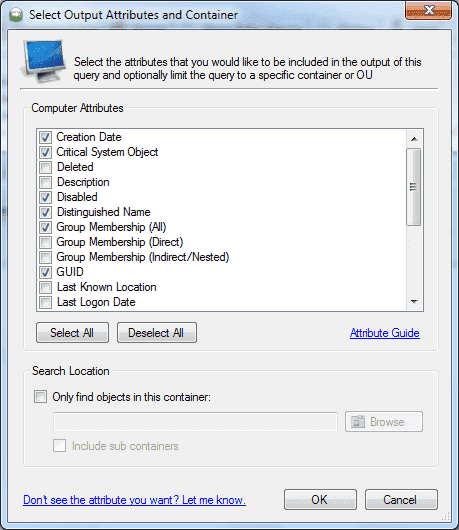
The Importance of an Active Directory Reporting Tool
In the realm of IT management, having a robust Active Directory (AD) reporting tool is essential for maintaining the security and efficiency of your network. An AD reporting tool provides valuable insights into user activities, permissions, group memberships, and other critical aspects of your AD infrastructure.
Enhanced Security
One of the primary benefits of using an AD reporting tool is improved security. By monitoring user activities and tracking changes to permissions and group memberships, you can quickly identify any suspicious behaviour or unauthorised access attempts. This proactive approach helps in preventing security breaches and ensures that your network remains secure.
Compliance Management
For organisations that need to comply with industry regulations or internal policies, an AD reporting tool simplifies compliance management. It provides detailed reports on user access rights, password policies, account lockouts, and more, making it easier to demonstrate compliance during audits.
Operational Efficiency
Monitoring and managing an AD environment manually can be time-consuming and prone to errors. An AD reporting tool automates many tasks related to auditing and reporting, saving IT administrators valuable time and resources. With automated reports and alerts, you can stay on top of any changes or issues within your AD infrastructure.
Real-time Monitoring
Many modern AD reporting tools offer real-time monitoring capabilities that allow you to track user activities as they happen. This feature is invaluable for detecting suspicious behaviour or unauthorised access attempts promptly. Real-time monitoring helps in mitigating security risks before they escalate into major incidents.
Conclusion
Investing in a reliable AD reporting tool is crucial for maintaining the security, compliance, and efficiency of your Active Directory environment. By leveraging the insights provided by such a tool, you can proactively manage your network, identify potential risks early on, and ensure that your organisation’s IT infrastructure remains resilient against cyber threats.
Maximise Your Advertising Success: 5 Essential Tips for Using Ad Reporting Tools
- Regularly monitor and review your ad performance metrics to identify trends and areas for improvement.
- Utilise the data provided by the ad reporting tool to make informed decisions about your advertising strategy.
- Compare different ad campaigns to see which ones are most effective in reaching your target audience.
- Use customisable reports to track specific KPIs that are relevant to your business goals.
- Take advantage of any automation features in the ad reporting tool to streamline your reporting process and save time.
Regularly monitor and review your ad performance metrics to identify trends and areas for improvement.
Regularly monitoring and reviewing your Active Directory performance metrics is essential for maintaining a secure and efficient IT environment. By analysing these metrics, you can identify trends, patterns, and potential areas for improvement within your AD infrastructure. This proactive approach allows you to address any issues promptly, optimise system performance, and enhance overall security posture. Keeping a close eye on your AD performance metrics ensures that you can adapt to changing circumstances effectively and continuously strengthen the resilience of your network against evolving cyber threats.
Utilise the data provided by the ad reporting tool to make informed decisions about your advertising strategy.
By utilising the data provided by the AD reporting tool, you can make informed decisions about your advertising strategy. Understanding user activities, permissions, and group memberships within your Active Directory infrastructure can offer valuable insights that can be leveraged to enhance the effectiveness of your advertising campaigns. By analysing this data, you can tailor your advertising strategy to target specific user groups more effectively, ultimately leading to improved campaign performance and better ROI.
Compare different ad campaigns to see which ones are most effective in reaching your target audience.
When utilising an Active Directory reporting tool, it is advisable to compare various ad campaigns to determine their effectiveness in reaching the intended target audience. By analysing the performance metrics of different campaigns, such as user engagement, click-through rates, and conversion rates, organisations can identify which strategies resonate most with their target demographic. This data-driven approach enables businesses to optimise their advertising efforts, allocate resources more efficiently, and ultimately achieve better results in engaging with their desired audience.
Use customisable reports to track specific KPIs that are relevant to your business goals.
Utilising customisable reports within your Active Directory reporting tool allows you to track key performance indicators (KPIs) that align with your business objectives. By tailoring reports to focus on specific metrics that are crucial to your organisation’s success, you can gain valuable insights into the performance of your AD environment. Customisable reports enable you to monitor and measure progress towards achieving your business goals, helping you make informed decisions and adjustments to enhance operational efficiency and security.
Take advantage of any automation features in the ad reporting tool to streamline your reporting process and save time.
By utilising the automation features available in your AD reporting tool, you can significantly streamline your reporting process and save valuable time. Automation helps in generating reports automatically, scheduling tasks, and sending alerts, allowing you to focus on strategic IT management tasks rather than manual data collection and analysis. Embracing these automation features enhances efficiency, accuracy, and overall productivity within your Active Directory environment.